
To stop condensation in a metal building you have to keep inside air away from cold steel. That is the whole game. Ventilation, dehumidifiers, and drip blankets all manage the symptom while the steel keeps sweating behind them. Closed-cell spray foam covers the panels completely and takes the cold surface out of the equation, which is why it is the only fix on this list that is permanent. Here is why your building rains inside, the fixes that fail, the one that works, and when you honestly do not need any of it.

Why metal buildings sweat
Warm air holds moisture. How much it can hold depends on temperature. Cool a batch of air down far enough and it hits a temperature where it cannot hold what it is carrying. That temperature is called the dew point, and the moisture comes back out as liquid water on whatever cold surface the air is touching.
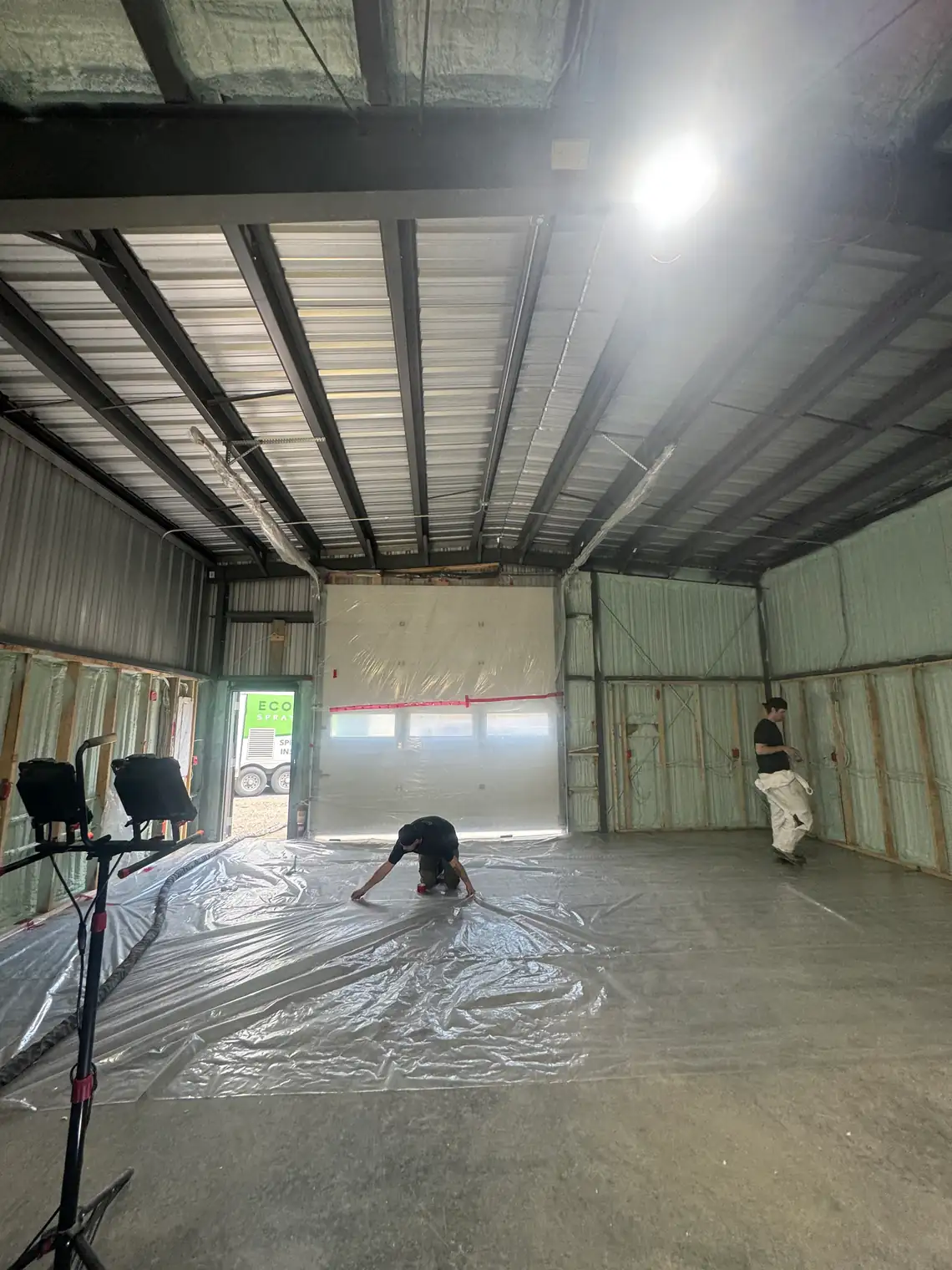
In a metal building that cold surface is everywhere. Steel panels have almost no insulating value of their own, so the skin of your building sits at whatever temperature it is outside. On a clear night the roof panels get even colder than the air around them. Meanwhile the air inside is warmer and wetter than you think. You breathe. Engines cool down. Concrete releases water for years after the pour. Snow melts off whatever you park inside. A propane heater adds moisture to the air as it burns, so heating an unsealed shop actually feeds the problem.
Warm moist air rises, touches the underside of a roof panel that is sitting below the dew point, and the moisture turns back into water right there. Every purlin becomes a collection point. Then the drips start, and by morning your tools have a film on them and the top of the hay stack is damp.
The building is not broken. It is doing exactly what physics says it should do. It is just doing it on your equipment.
The fixes that fail
Every metal building owner tries at least one of these before calling us. Here is why they disappoint.
Ventilation alone
Ridge vents, louvers, and fans swap humid inside air for outside air, and for an unheated storage building that genuinely helps. The problem is what ventilation cannot do. It cannot warm the steel. Any winter day the panels sit below the dew point of the air inside, and the vents just deliver a fresh supply of air to sweat with. In a heated shop it is worse, because every air change throws your heat outside. You end up paying to warm air, dumping it, and warming more.
Dehumidifiers
A dehumidifier works fine in a sealed room. A bare metal building is not a sealed room. It leaks air at every panel lap, every trim line, every door. New moist air walks in as fast as the machine can dry the old air, and the machine runs forever trying to keep up. A dehumidifier in a leaky metal building is not a fix. It is a subscription.
Anti-condensation blankets
DripStop and similar products are a felt layer bonded under the roof sheeting. Condensation still forms, the felt holds it, and it evaporates later instead of dripping on your stuff. Read that again. The moisture still forms every cold night. You have not stopped condensation, you have stapled a sponge to your ceiling and asked it to be patient. On a new cold-storage roof it is a reasonable feature. On a heated shop it insulates nothing, seals nothing, and in a long cold snap it can saturate and start letting go anyway.
Fiberglass batts against the steel
The batt price looks great until you understand vapour drive. Warm inside air constantly pushes moisture toward the cold side of the wall. Against bare steel, that moisture travels through the fluffy batt, meets the cold panel, and condenses inside the insulation itself. Wet fiberglass stops insulating, sags off the wall, and holds a damp blanket against your steel. We covered this failure in detail in our metal building insulation cost in BC guide, but the short version is that batts belong inside a proper wall assembly, and a bare steel shell is not one.
The fix that works
Closed-cell spray foam stops condensation because it attacks the actual cause. The foam bonds directly to the panels and hardens, so the cold steel is buried behind insulation and inside air can never touch it again. The surface your shop air now sees is the warm face of the foam, which sits above the dew point. No cold surface, no condensation. Not less. None.
The same pass air-seals the building. Every panel lap, every gap around the girts, every mouse-sized opening gets closed at once. That matters because moving air is the delivery truck for moisture. A full closed-cell seal eliminates air infiltration, moisture, and condensation in a metal building entirely, and it stiffens the panels while it is at it.
This is the same job we do on farms, where spray foam works less like insulation and more like a problem elimination machine. Grain bins that sweated and damaged crops, fixed. Water tanks that froze every winter, not anymore. Metal shops so cold in January the tools were frosting up, done. One product, one pass, whole list gone.
Two local examples with the exact spec most shops need. A shop in West Kelowna and a shop in Falkland both got two inches of closed-cell foam across the full interior, walls and ceiling. Two inches gives R-11.4, full coverage of every cold surface, and a sealed building. Both are dry.
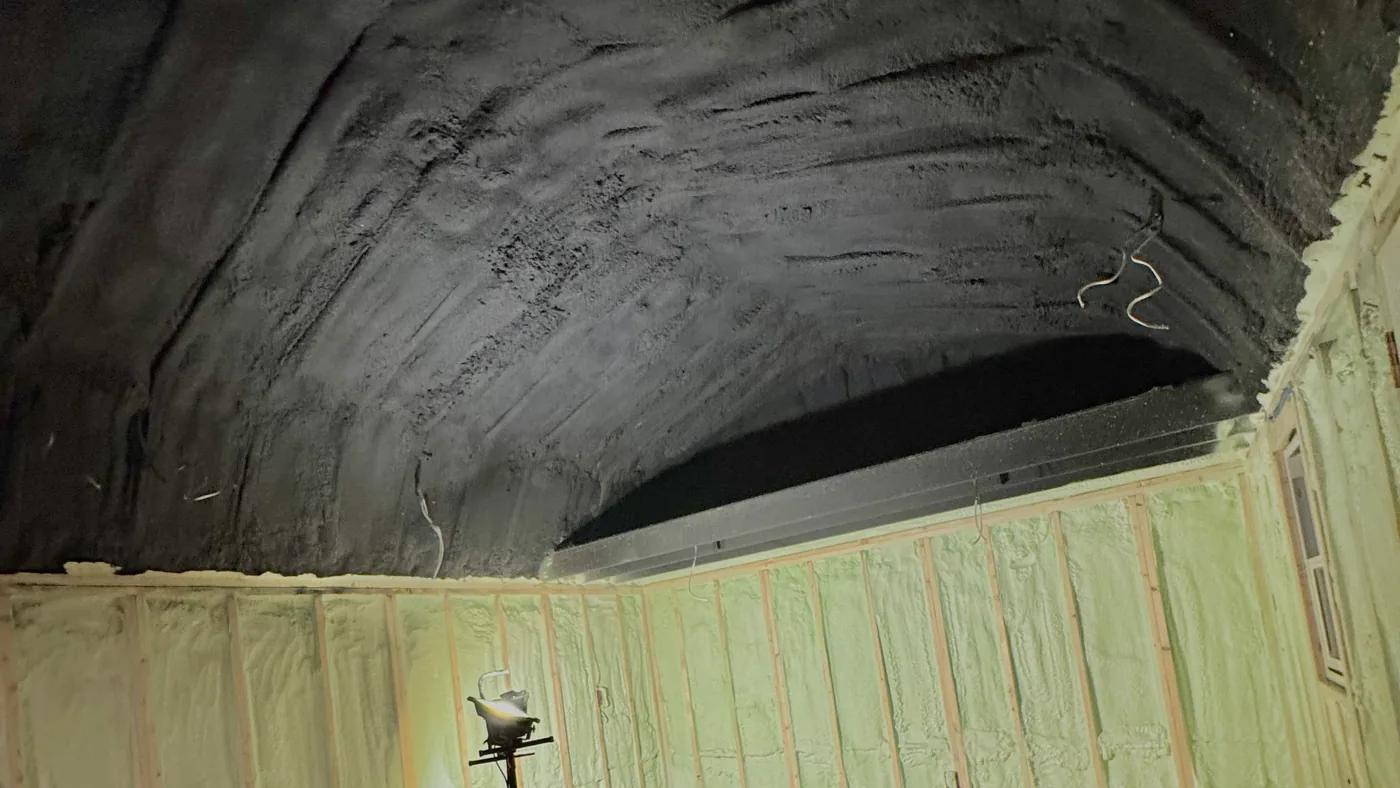
One caution before you hire anyone. This trade is more technical than it looks. Foam only performs when the substrate temperature is in spec, the spray pressure holds at 800 psi minimum, and no pass goes thicker than two inches. Get any of that wrong on cold steel and the foam does not fail loudly. It just quietly underperforms for the life of the building, behind a surface that looks fine. The knowledge is in the rig and the hands running it, and that is what you are paying for. For shop work around Kelowna, that crew is our spray foam insulation in Kelowna team.
What it costs
Three things set the number: the square footage being sprayed, how thick the foam needs to be, and how much prep the steel needs first. Most condensation jobs land at the two-inch spec above, and sealed buildings typically see heating and cooling costs drop 25 to 40 percent month to month, which is how the foam pays itself back. We priced all of this out in the metal building insulation cost in BC post, including the honest part most contractors skip: detached shops and outbuildings do not qualify for CleanBC home rebates, so the shop has to stand on its own math. Larger commercial and agricultural buildings run through the same crew, starting from our commercial spray foam insulation page.
When you do not need foam
Sometimes the answer is keep your money, and you should hear that from an insulation contractor at least once.
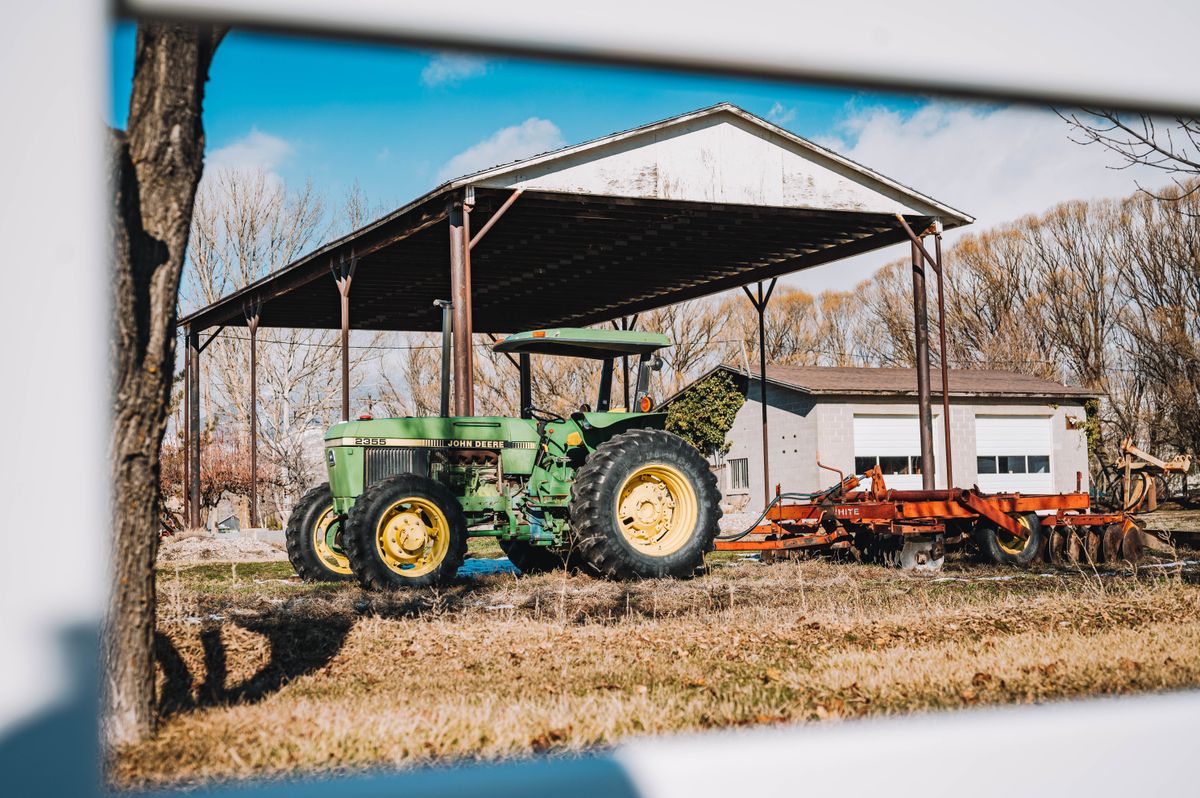
If the building is unheated, well vented, and nothing inside minds a damp morning, you can live with seasonal sweating. Open-sided hay cover, a shed holding a tractor that spends half its life in the rain anyway, gravel and lumber storage. Ventilation is the right answer for those buildings, and it is nearly free. If the building has a demolition date, do not foam it either. Foam is permanent, which is the whole point, and permanence is wasted on a building that is leaving.
The buildings in between are where the damage happens. A heated shop, a barn holding feed, anything with tools, equipment, or product that rusts, rots, or moulds. If your building is dripping on something you care about, the sweating will not stop on its own. It has a renewable water source and infinite patience.
Get a straight answer for your building
The free building assessment is exactly what it sounds like. We come out, measure every surface, look at how you heat and use the building, and tell you whether foam is even the right answer for it. If ventilation and patience will do the job, we will say so and you will have lost an hour. If it will not, you get a written report and a firm price where the number given on site is the number on the invoice.
Book a free building assessment or call (250) 900-6613. The building has been making its own weather long enough.
Sources
- Natural Resources Canada, Keeping the Heat In: natural-resources.canada.ca
- CleanBC Better Homes program: betterhomesbc.ca
- Featured image: Photo by Engin Akyurt on Pexels