
Metal building insulation cost in BC comes down to three things. The size of the building, how thick the foam needs to be, and how much prep the steel needs before anyone pulls a trigger. Nobody can hand you an honest flat number over the phone, and the people who do tend to revise it later. What this post can give you is what moves the price, what the fix actually is, and why the cheap option in a metal building usually ends up soaked. Because if you searched this, your building is probably raining on the inside.
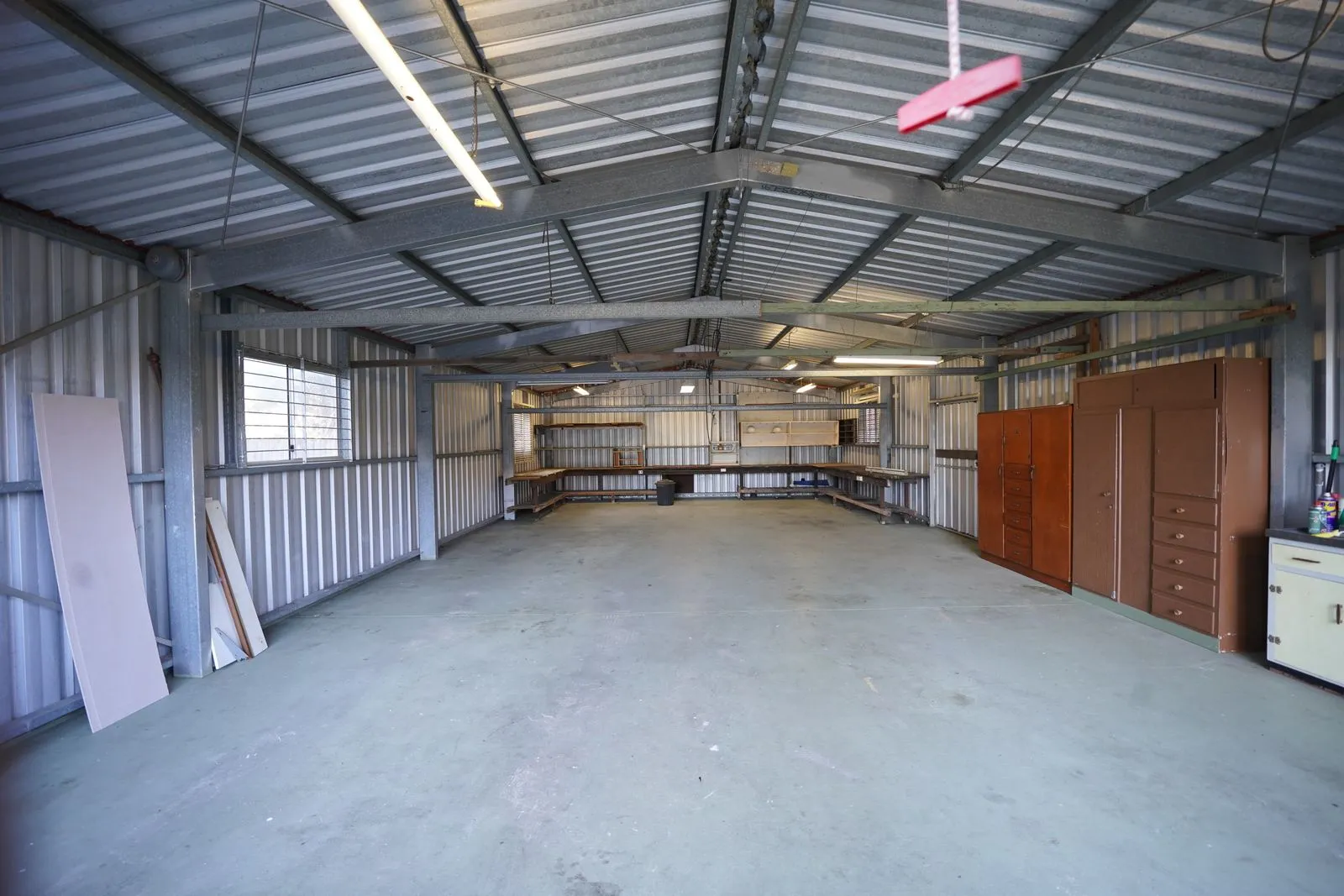
Why your metal building rains inside
Your roof is probably fine. The building is sweating. Somehow that is worse than a leak, because you cannot patch it.
Here is the plain version. Steel gets as cold as the outside air, almost instantly. The air inside your building is warmer and always carries some moisture. You breathe. Equipment runs. Concrete gives off water for years. When that warmer air touches the cold steel, it cools past the point where it can hold its moisture, and the moisture turns back into water right there on the metal. Roof panels film over. Purlins collect drips and let them go. Tools rust in a closed toolbox. Hay comes off the stack damp on top.
Heating the building without sealing it can make things worse. A propane heater throws moisture into the air as it burns, so you are paying to fight a building that is actively working against you. And the fix people try first, more ventilation, mostly just invites in a fresh supply of air to sweat with.
The problem is not the weather. It is bare steel that inside air can touch. Cover the steel completely and the whole cycle stops. We wrote a full guide on how to stop condensation in a metal building, including the fixes that fail and why.

One pass instead of three products
In a house, insulation, air sealing, and moisture control are three separate layers. In a metal building, closed-cell spray foam does all three in one pass. The foam bonds directly to the panels and hardens. There is no gap behind it, no cold surface left for inside air to find, and no path for outside air to leak through. A full seal eliminates the air infiltration, the moisture, and the condensation entirely. Not reduced. Gone.
It does a few other things while it is at it. Closed-cell foam is rigid, so it stiffens the panels and takes the drum out of a metal building in the wind. It extends the life of the structure. And it closes every gap mice were using as a front door, which on a farm means you are getting rid of the extra rodents. There is an acceptable baseline. Foam handles the rest.
One job that shows the range here. A licensed marijuana grow operation bought a metal building that could not hold its environment at all. Temperature and humidity went wherever the weather pointed them. A full closed-cell seal turned it into a building that holds whatever conditions the plants need. It went from uncontrollable to purpose-built with one product.
The building industry has been slow to figure out what farmers and shop owners are catching onto. Spray foam solves more problems per dollar than anything else you can put in a building, and people get stuck on the price tag without doing the ten-year math. The math is not subtle. On a comparable building, closed-cell foam saved $1,355 a year over batt and poly with identical heating equipment, and our customers typically see heating and cooling costs drop 25 to 40 percent month to month.
What metal building insulation actually costs in BC
Three drivers set the number.
Area. Walls plus roof, measured in square feet. A 40x60 shop and a warehouse are different animals. This is the driver you already know.
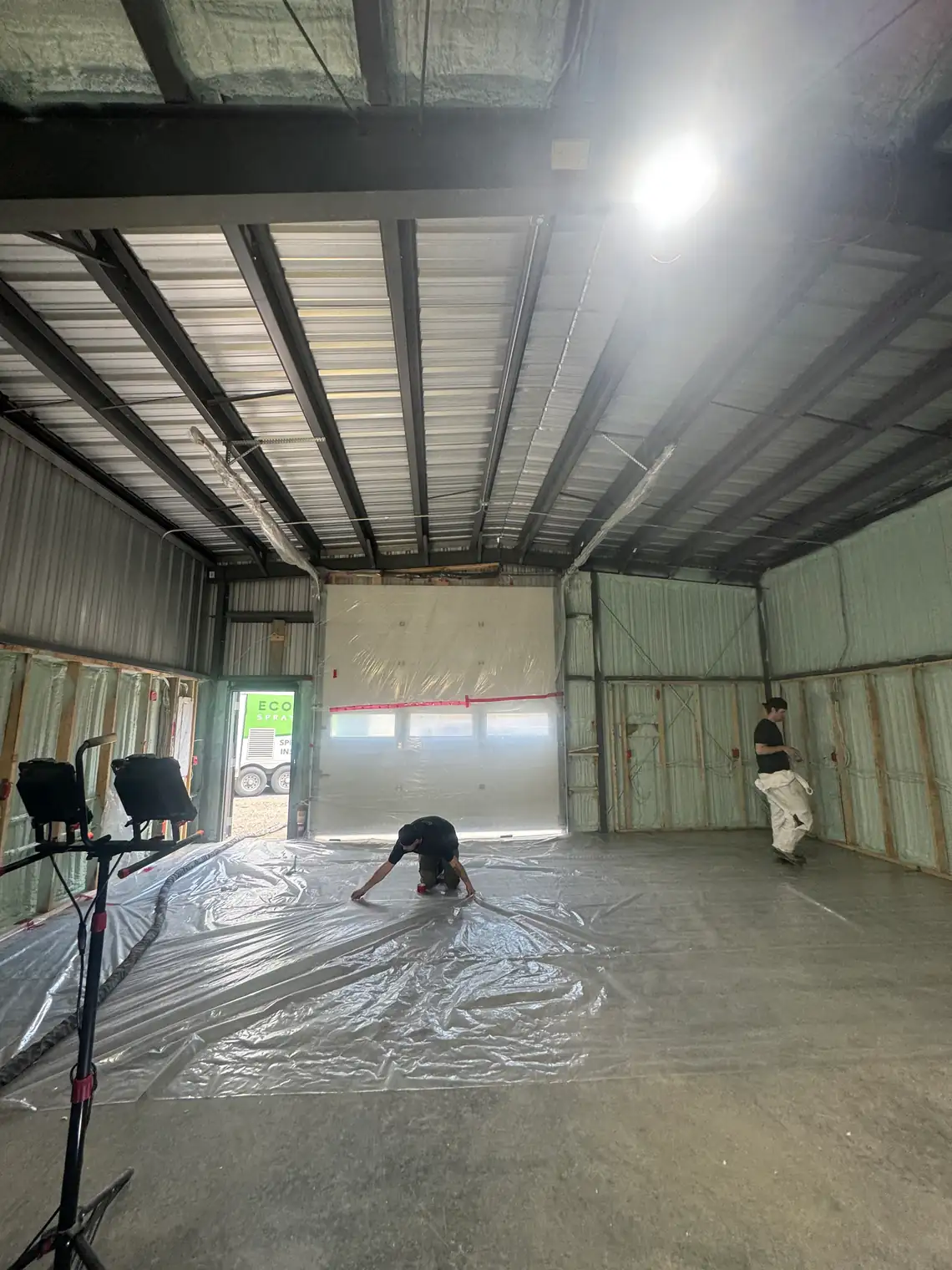
Thickness. Spray foam is priced by how much area you spray and how deep. Doubling the depth roughly doubles the foam, so the same shop can carry two quite different prices depending on the spec. Most shop jobs land around two inches of closed-cell foam over the walls and ceiling. That gives R-11.4, a full air seal, and the end of condensation. Two recent shops, one in West Kelowna and one in Falkland, got exactly that spec. A shop you heat and work in every day through January might justify more, since the foam reaches R-30.7 at five inches. Storage buildings usually need less than owners expect. Heated workspaces sometimes need more.
Prep. Foam bonds to clean, dry steel. Oily panels need washing. Failed batts and torn vinyl need to come out first. Equipment needs moving or covering. A packed shop sprays slower than an empty one, and slower costs more.
For the bigger picture on how foam pricing works, our spray foam insulation cost in BC guide walks through it. For shop work close to home, see spray foam insulation in Kelowna.
What we will not do is guess a total from the driveway or the phone. Phone quotes in this trade have a habit of climbing 20 to 40 percent by invoice day, with a list of reasons why. Ours are written on site after measuring, and the number given is the number invoiced.
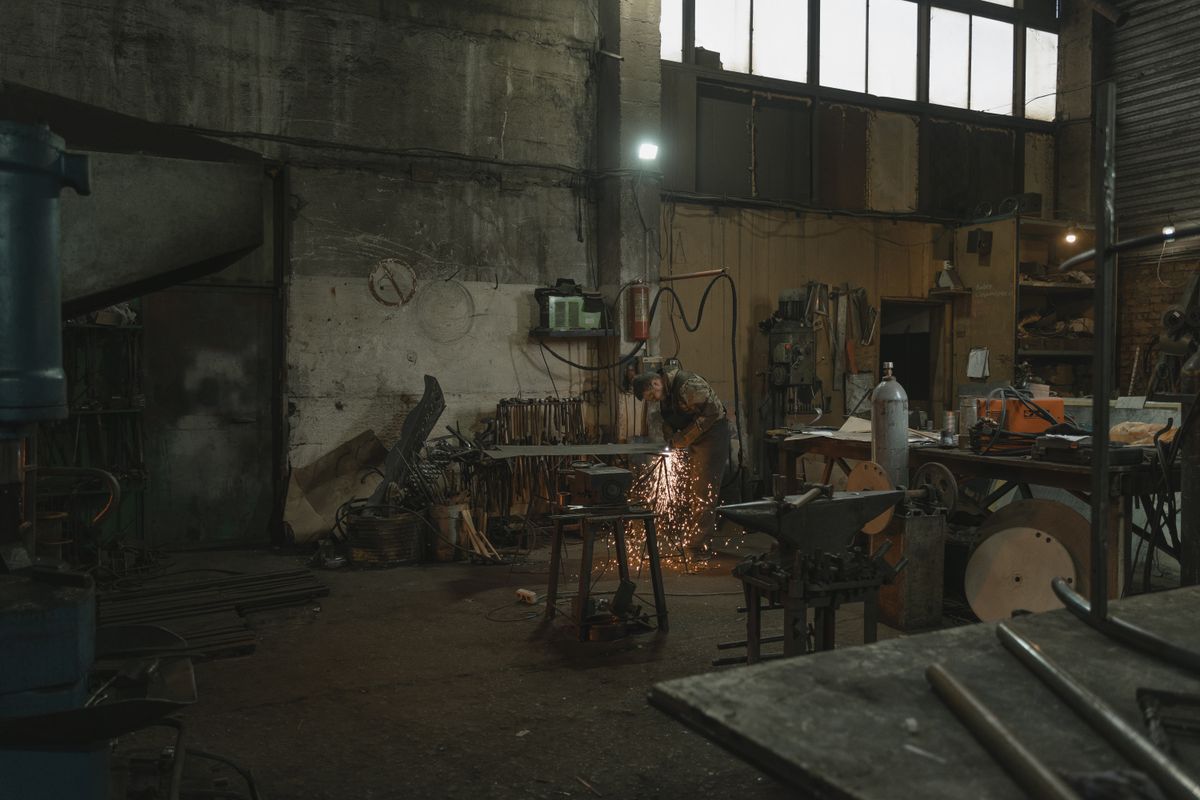
Why fiberglass batts fail against steel
The batt price per square foot looks great. In a metal building it is buying you a future problem.
The mechanism is called vapour drive. Warm inside air constantly pushes moisture outward into the wall. In a house, a proper assembly manages that. Against a bare steel panel, the moisture travels through the batt, meets cold metal, and condenses inside the insulation itself. Wet fiberglass loses its insulating value, and it does not dry out in there. Then gravity gets involved. Wet batts sag, slump off the wall, and leave bare steel right back where you started, except now with a damp blanket at the bottom holding moisture against the panel.
A fiberglass batt against cold steel is not insulation. It is a sponge with ambition.
The vinyl-faced rolls that come standard on many steel buildings fare a little better until the facing tears or the seams open, which they do. After that, same story. Closed-cell foam does not play this game at all. It absorbs almost no water, 1.6 percent by volume, fungi cannot grow on it, and it cannot sag because it is bonded to the building.
The rebate answer nobody likes
Here is the honest part. The main BC home efficiency programs, like CleanBC Better Homes and the FortisBC rebates, are built for houses. A detached shop, a pole barn, or a farm outbuilding does not qualify. If a contractor is sweetening a shop quote with rebate promises, ask them to show you where the program says that. You will both learn something.
One useful exception. If we are insulating your house as well as your shop, the house side carries real rebate money, and we check every program you qualify for during the assessment. The shop stands on its own math, and the math is the energy you stop burning and the equipment you stop replacing.
When foam is the wrong answer
Sometimes it is, and you should hear that from us before you hear a price.
If the building is coming down in a few years, do not foam it. Spray foam is permanent, which is the whole point, and permanence is wasted on a building with a demolition date. On the other hand, if you are debating replacing a tired 20-year-old metal building, run the numbers first. Foaming it costs a fraction of replacement and adds decades of life.
If the building is never heated and nothing inside minds getting damp, gravel storage, machinery that lives outside half the year anyway, you may not need us either. Keep your money.
Everything between those two cases, a shop you work in, a barn holding feed, a building sweating onto anything you care about, is exactly what closed-cell foam is for. Larger commercial projects run through the same crew, starting from our commercial spray foam insulation page.
Get a firm number instead of a guess
The free building assessment is the shop owner version of measure twice, cut once. We come out, measure every surface, check the steel, and look at how you actually use the building. You get a written report, a firm price where the number given on site is the number on the invoice, and a straight answer on whether foam is even the right move for your building. If it is not, we will say so and you will have lost an hour.
Book a free building assessment before another winter of wiping down your tools. The building has been winning long enough.
Sources
- CleanBC Better Homes program: betterhomesbc.ca
- FortisBC rebates: fortisbc.com/rebates
- Bare metal building interior photo: Photo by Kevin Chuang on Pexels