
Floor insulation in BC comes down to one question: what is under the cold floor. A crawlspace, a cantilever, a garage, or a rim joist. Each one leaks heat a different way and each one has a different fix. Get that part right and the floor stays warm without touching the thermostat. Get it wrong and you pay for batts that sag out of the joists by the second winter. Cold floors are the one insulation problem you get to feel through your socks every single morning. That is a fair reason to want it gone.
Why your floor is cold
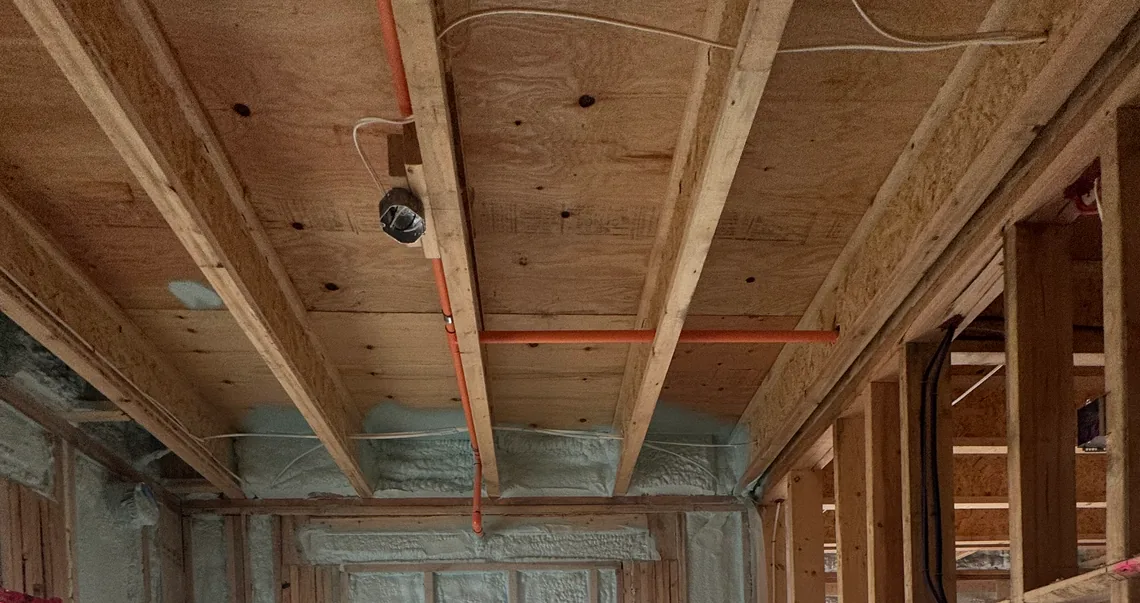
Heat leaves a floor three ways. It conducts down through the wood into whatever cold space is below. It rides out on air leaking through gaps at the edges. And it drops away wherever the insulation and the air barrier do not line up, which in most older BC homes is everywhere.
The floor itself is rarely the problem. The problem is what it sits on top of. A vented crawlspace runs close to outside temperature most of the winter. An unheated garage is a big cold box with a bedroom on its lid. A cantilever hangs out past the foundation with nothing but siding between the joists and January. Your floor is doing its best. It just has cold air on the wrong side of it.
Natural Resources Canada says the same thing in more words. Insulation only works when the air is sealed on the same side of it. A batt with cold air moving through it is a filter, not a blanket.
The four cold floor spots and what fixes each
The floor over a crawlspace
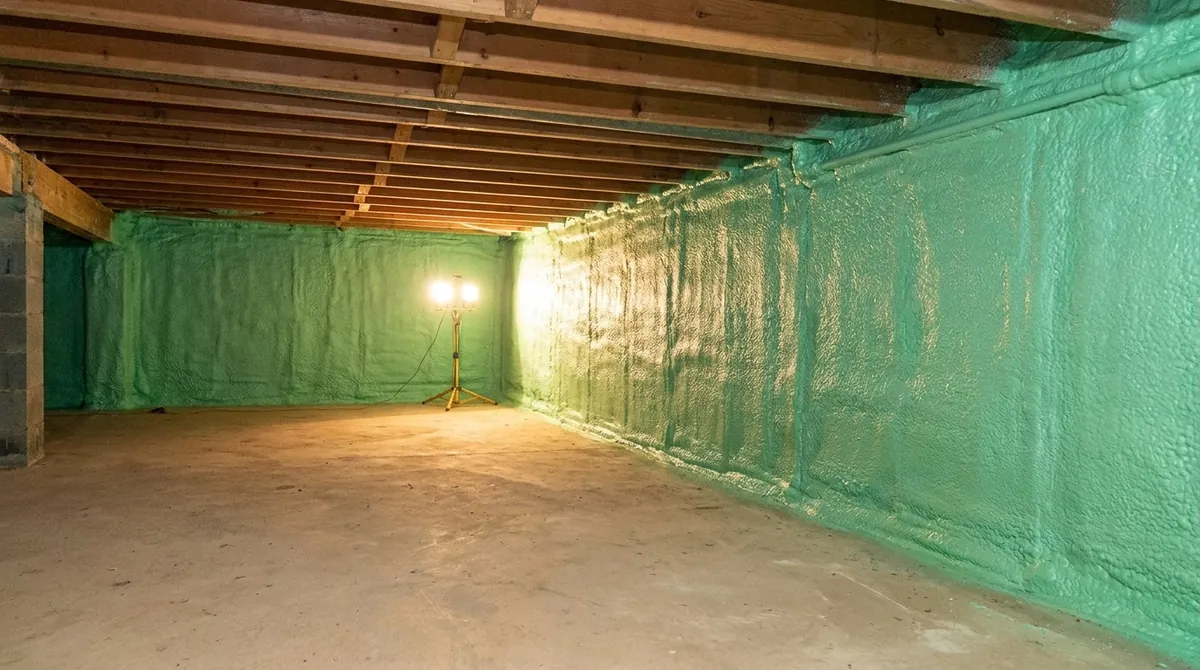
Most people's first instinct is to stuff batts up between the floor joists. That treats the crawlspace as outdoors. The batts sag, they get damp, and the pipes and ducts down there stay cold all winter. The better move is to insulate the crawlspace walls with closed-cell foam and seal the dirt floor, so the whole space joins the warm side of the house. The floor above warms up because the air under it is now warm. Our crawlspace insulation guide for BC walks through vented versus sealed if you want the long version.
The one time we foam the floor instead is a crawlspace that cannot be sealed. Open to a garage, or with vents that must stay for a gas appliance. Then the joist bays get foam, and the rim joist along with them.
Cantilevers and bay windows
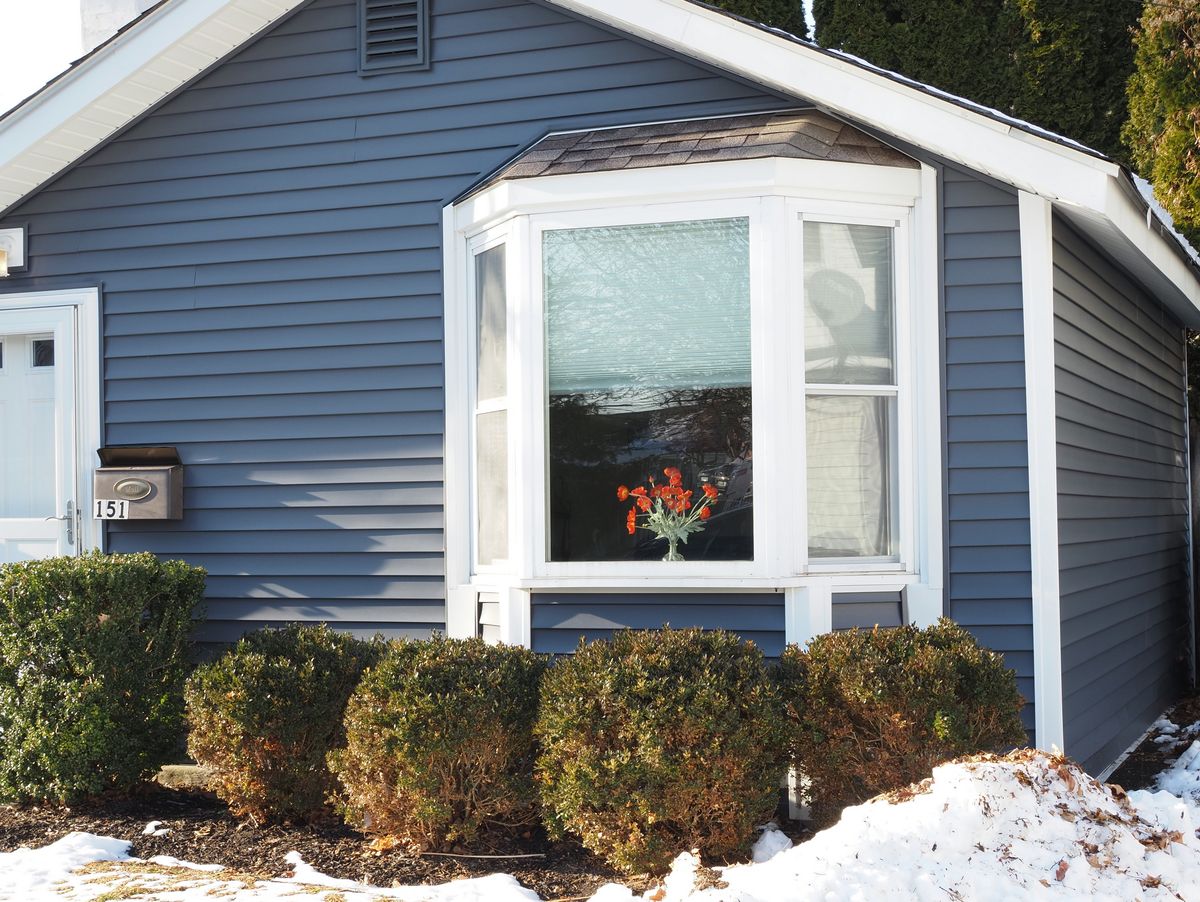
A cantilever is any part of the floor that sticks out past the wall below. Bay windows, bump-outs, the upper floor that overhangs the lower one on a split level. The joists are open to the cold on three sides, and the floor above them is the coldest spot in the house by a wide margin. The fix is to open the underside, pull out whatever damp batt is in there, foam the joist bays right back to the wall line, and close it up. Closed-cell foam is the product for it because it seals the air and does not care about moisture. The Building America guide to cantilevered floors has the diagrams if you like diagrams.
A rural homeowner had us do exactly that job, a bay window and a cantilever on a split level. She left a review afterwards, and the part I like most is not about the foam. It is about the drive. "He let me know when others in my area (rural) were booked so we could share the truck rate, which saved us money." We do that on every rural job. If the truck is heading to your area anyway, you should not be paying for the whole trip.
The room over the garage
Everyone who has one already knows. The bedroom over the garage is the cold one, and in July it is the hot one. The garage ceiling usually has a batt in it, pushed up loose, with the ends of the joists wide open to the garage. Air moves straight through fibreglass, so the batt is more of a suggestion than a barrier.
Foam on the garage ceiling seals the joist bays and the rim in one pass. It also closes the path for exhaust and fumes to drift up into the bedroom, which is a benefit nobody puts on the invoice but everyone appreciates.
The rim joist
Every floor ends at the rim joist. It is a band of wood sitting on the foundation with a whole floor's weight on it and, usually, nothing but a loose batt in front of it. It is the leakiest spot in most BC houses. Two inches of closed-cell foam seals it, and at two inches the foam is its own vapour barrier, so there is no poly to fight with. We wrote a whole post on rim joist insulation. Whichever of the four spots you have, the rim gets done at the same time. It is already open. It would be strange not to.
Why batts under a floor keep failing
Fibreglass works by holding still, dry air. A floor over a cold space gives it moving, damp air instead. Gravity does the rest. The batt sags, pulls away from the subfloor, and leaves a gap right where the insulation is supposed to touch. A gap like that means the batt is now insulating the crawlspace instead of your floor. Wet batt holds about as much heat as a wet towel, and it does not dry out down there. Mice find it, because mice always find it, and by year five you have a cold floor, a smell, and a rodent housing project.
Closed-cell foam does the opposite. It sticks to the wood, so nothing sags. It absorbs 1.6 percent water by volume, which is close enough to nothing that mould has no interest in it. Testing shows no fungus growth on it at all. Air does not pass through it. And there is nothing soft in it to nest in. Mice want nothing to do with it, which is rare praise from a mouse.
What floor insulation costs in BC
Closed-cell spray foam at market pricing runs about $1.80 per board foot. Most quotes land between $1.60 and $2.00. Batt and poly installed comes in near $1.71 per square foot. A board foot is one square foot at one inch thick, so foam costs more for the same area. It also gets installed once.
Here is the opinion we stand behind. Spray foam is expensive, and every dollar of it is doing something. Better foam. Trained crew. Certified equipment. Two inch passes and density checks. You cannot see under your floor after the job is done. If someone charged you for four inches and sprayed three, you will not find out until the heating bill tells you. The cheap guy costs more in the end. Every time.
One more caution from inside the trade. A quote given over the phone or from the driveway is not a promise. Free quote contractors commonly hand over an invoice 20 to 40 percent higher than the number that won the job, and there is nothing in writing to stop it. Get the price in writing before a hose comes off the truck, no matter who you hire. If you are in the Central Okanagan, here is how our spray foam work in Kelowna gets priced and done.
The rebates most people miss
Most of this work qualifies for insulation rebates in BC. The typical rebate is about $1,200 per service, and pairing the floor with another area in the same project, like the attic or the rim joist, triggers a bonus rebate on top. The program pays up to $5,500 as the scope grows. FortisBC publishes the current details.
The fine print that matters: a registered contractor has to do the work and file the paperwork. We are registered, and we file it. Across our residential jobs, heating and cooling costs typically drop 25 to 40 percent month to month after spray foam, depending on what was there before and how much of the house we did. Payback on a typical install lands in 2 to 4 years.
When not to insulate your floor
We turn down floor work more often than you would think. Usually for one of these reasons.
The space below is heated. If your basement is finished and warm, insulating the floor above it does nothing. The heat is on both sides. Spend the money on the attic.
Water gets into the crawlspace. Insulation does not fix drainage. It hides it. Fix the grading, the gutters, or the crack first, then call us back.
The floor is a slab on grade. Foam cannot go under a slab that is already poured. That is a different conversation, and usually the answer is the walls and the attic.
If one of those is you, we will say so at the assessment and point you at the better project. It costs us a job and it is still the right answer.
Floor insulation across the BC Interior
Cold floors do not care about the postal code. We do this work through the whole region, from Salmon Arm, where plenty of houses sit over vented crawlspaces that have never been sealed, to West Kelowna, where the split levels on the hillsides come with cantilevers as standard equipment. Same physics. Same fix.
The next step
If your floors are cold, book a free building assessment. We show up, look under the floor, measure every space, and hand you a written report with a firm price. The number we give on site is the number on the invoice. You also get a rebate report and a contractor comparison checklist that protects you no matter who you hire.
Or call (250) 900-6613 and tell us what your floors feel like in February. We will tell you straight what is going on under them.