
Most attic insulation problems have nothing to do with the insulation. They sit underneath it. A bathroom fan pointed at the roof deck. Wiring that was never meant to be buried. Soffits packed shut with fibre. Bury any of those under a foot of fresh blown-in and you have not fixed a cold house. You have hidden the reason it is cold, under the one material specifically designed to make things hard to see. Here are the six we find most often in Okanagan attics, and what to do about each one first.
Problem 1: The insulation stops before it reaches the edges
This is the most common one by a wide margin. Whoever did it last worked across the open middle of the attic where there is headroom, then stopped where the roof drops down and the job gets miserable.
That perimeter is exactly where your walls meet your ceiling. It is the coldest strip in the house and the one you feel. A blanket that stops at your knees is not really a blanket.
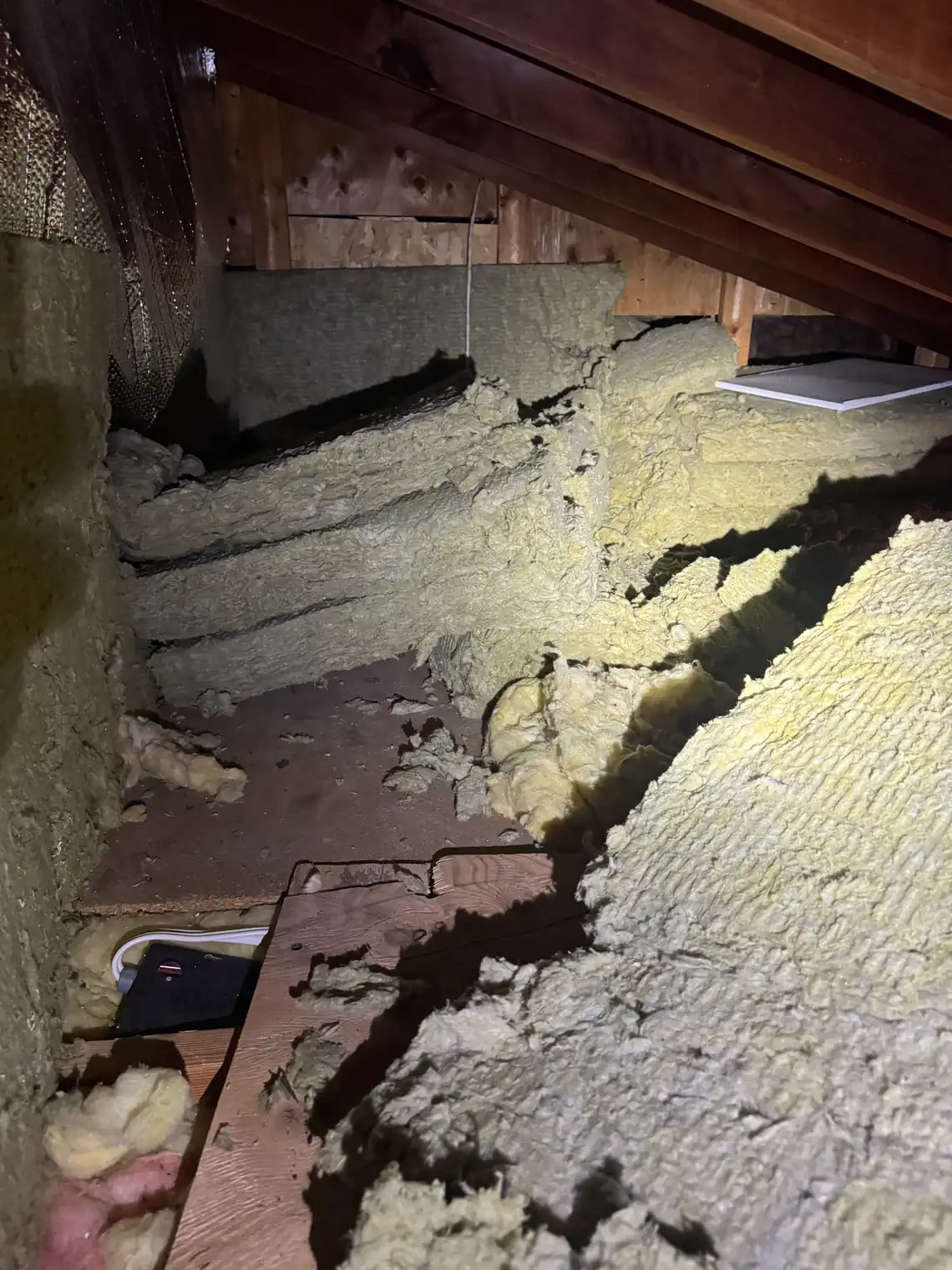
You can check this yourself from the hatch with a flashlight. Do not look at the middle. Look out at the low edges where the roof meets the walls. Bare wood or a thin skim out there is your cold bedroom, your ice dam, and the room nobody sits in.
The fix is coverage, not depth. Adding more where it is already deep buys you almost nothing. Getting the same depth all the way out to the wall buys you a lot, and it is a large part of what separates one attic insulation cost in BC from another.
Problem 2: A bathroom fan blowing straight into the attic
Open the hatch and look for a flexible duct that simply ends. Sometimes it points vaguely at a vent. Often it is lying on the insulation aimed at nothing in particular.
Every shower sends warm wet air up there. In an Okanagan winter that air meets cold roof sheathing and turns straight back into water. You get damp insulation, dark staining on the underside of the roof, and in a bad attic a layer of frost that melts and drips through the ceiling during the first February thaw. Wet insulation does close to nothing. Somebody paid for that fan, wired it in, and aimed it at the one part of the house that handles moisture worst.
The fan needs a duct to the outside through a roof or wall cap, sealed at the joints and sloped so any water runs out rather than back. It is a small job. It is also the difference between insulation that works and insulation that quietly rots the roof above it. Same goes for a dryer vent if it ends in the attic, which happens more than it should.
Problem 3: Knob and tube wiring
Plenty of older Okanagan homes still have it. Two separate wires held off the framing by little ceramic knobs, no ground anywhere.
The important part is why it looks like that. Knob and tube was designed to shed its heat into open air. That is the entire idea. Bury it in insulation and it cannot. This is why home inspectors flag it, why insurers ask about it before they write a policy, and why we will not blow over it.
If you find it, get an electrician up there before anyone talks about insulation. Sometimes it turns out to be dead and abandoned, left in place because pulling it was not worth the trouble. Sometimes it is live and feeding half the upstairs. Either way you want that answer before the attic is full, not after.
Problem 4: Vermiculite
Vermiculite looks like small grey brown pebbles poured between the joists. A bit like popcorn, a bit like cat litter. If your house was insulated before 1990, there is a real chance of finding it.
The concern is asbestos. Much of the vermiculite sold in Canada came from a single mine in Libby, Montana, and that ore can contain asbestos. It was sold here under the name Zonolite. The federal position is clear enough: sealed off from the living space and left alone, there is no evidence of a risk, but work that disturbs it can create one. If your house is the right age, read the federal guidance on vermiculite insulation before anyone goes up there.
Blowing insulation over it disturbs it. So does dragging a hose around on top of it. We do not touch vermiculite. If we open a hatch and see it, we stop, we tell you what it looks like, and you get it tested by a lab before anybody plans anything.
This is one of the times we tell people not to hire us yet. Testing, and abatement if the test comes back positive, is a different trade with different tickets. Insulation comes after.
Problem 5: Pot lights that were never made to be buried
Recessed lights come in two kinds. Some are built to be covered with insulation. Some are not, and covering those is a fire risk. The rating is stamped inside the housing, in the one place in your house nobody has ever looked.
The older fixtures in most Okanagan homes are the kind you cannot cover. They need clearance held around them, or a sealed box built over the top so insulation can run right across without ever touching the fixture. Skip that and you get one of two outcomes. Either a fire risk, or a row of open holes venting warm air out of your ceiling all winter. A lighting choice from 1998 should not be costing you heat in 2026, but here we are.
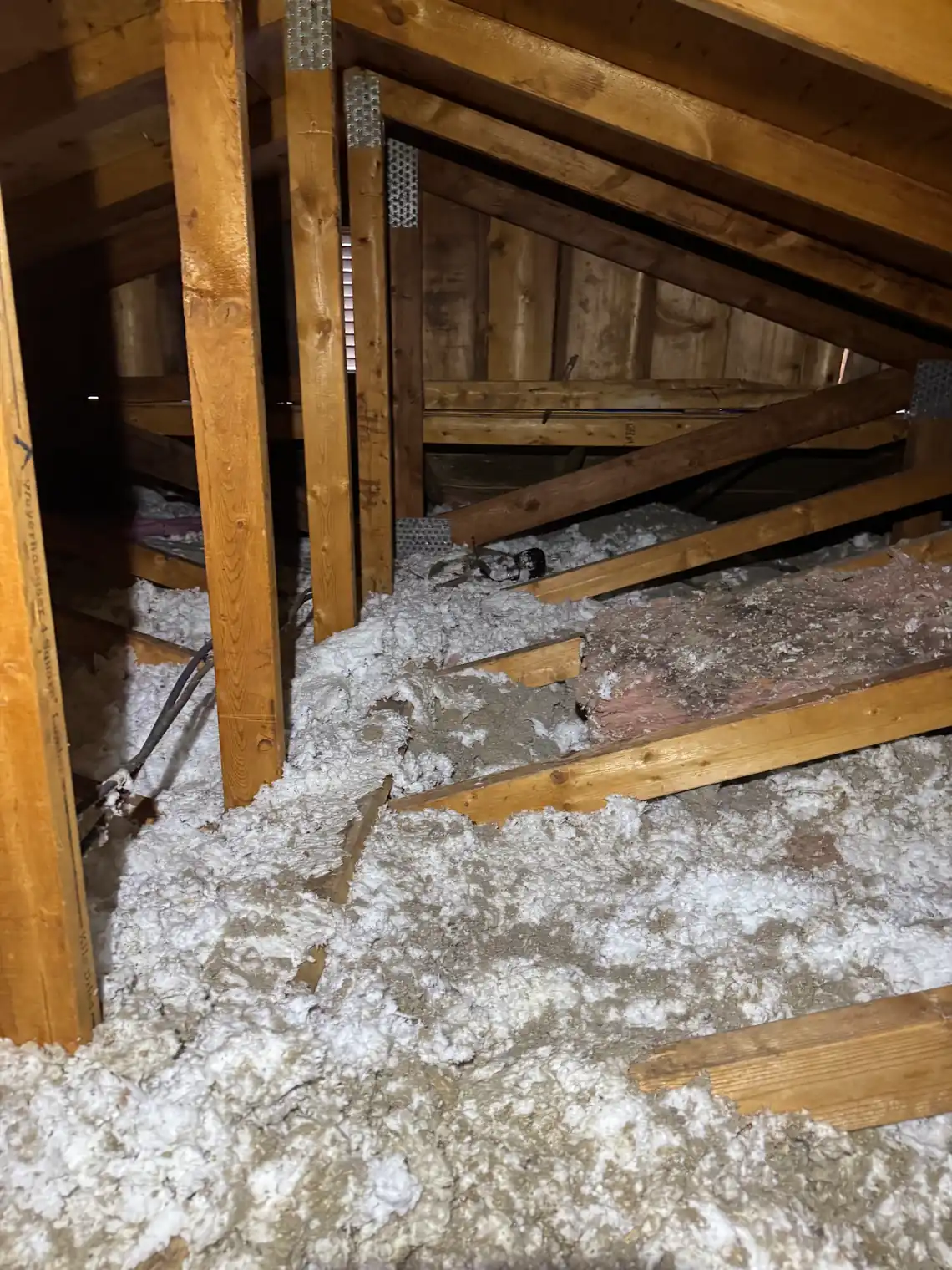
Problem 6: The soffits are packed shut
Your attic needs air moving through it. Cold air comes in at the eaves, travels up under the roof deck, and leaves near the peak. That movement is what keeps the sheathing dry and stops ice building along the bottom edge of your roof.
Blown-in fibre drifts out into that gap and plugs it. So does batt, when somebody pushes it right out to the edge trying to be thorough. Being thorough in the wrong direction is a real hazard in this trade.
The fix is baffles. Simple cardboard or foam channels stapled between the trusses at the eave that hold the air path open, so you can build insulation up to full depth behind them without choking the attic. Natural Resources Canada sets out the ventilation and airflow rules in its roofs and attics guide if you want the detail.
If your roof grows a row of icicles every January and the identical house next door does not, this is usually the reason. Not the roof. The attic.
What we will not cover up
There is a pattern in this trade that costs people real money. Somebody quotes a cheap number, does the fast version, and covers a problem instead of fixing it. It looks finished. It passes the flashlight test from the hatch, which is the only test most of these jobs ever get.
We have been called in to strip work like that out. A customer hired an uncertified installer, the work failed inspection, and all of it had to come out before it could be done properly. By the time they paid to remove the first job and then paid for the second, they were into it for triple or quadruple the original quote. The cheap number was never the real number. It was just the first one.
So here is our list, plainly. We will not blow insulation over live knob and tube. We will not touch vermiculite. We will not bury a bath fan that vents into the attic, and we will not pack your soffits shut to make the depth read better. If your attic has one of these, you will hear about it, and sometimes you will hear that you should call a different trade before you call us again. That is not us being difficult. It is the only version of this job that still works in ten years.
The order that actually works
Look first. Fix what is broken. Seal the ceiling plane. Then insulate to depth, edge to edge.
That order is the whole thing, and it is why we do not quote attics over the phone. A number given from a driveway is a guess about a space the person guessing has not been in. Every contractor will price your attic for nothing. A fair number of those invoices then come back 20 to 40 percent higher once the crew gets up there and meets the bath fan, and nothing in that arrangement protects you from it.
Our free building assessment is a different thing wearing the same word. We go up, measure every space, write down what is actually there, and hand over a firm price where the number given on site is the number on the invoice. You also get the written report, a rebate report, and a checklist of what to ask anybody else, and you keep all of it whether you hire us or not. If you are still weighing whether to do it yourself, our post on attic insulation installers and DIY covers where that line usually falls.
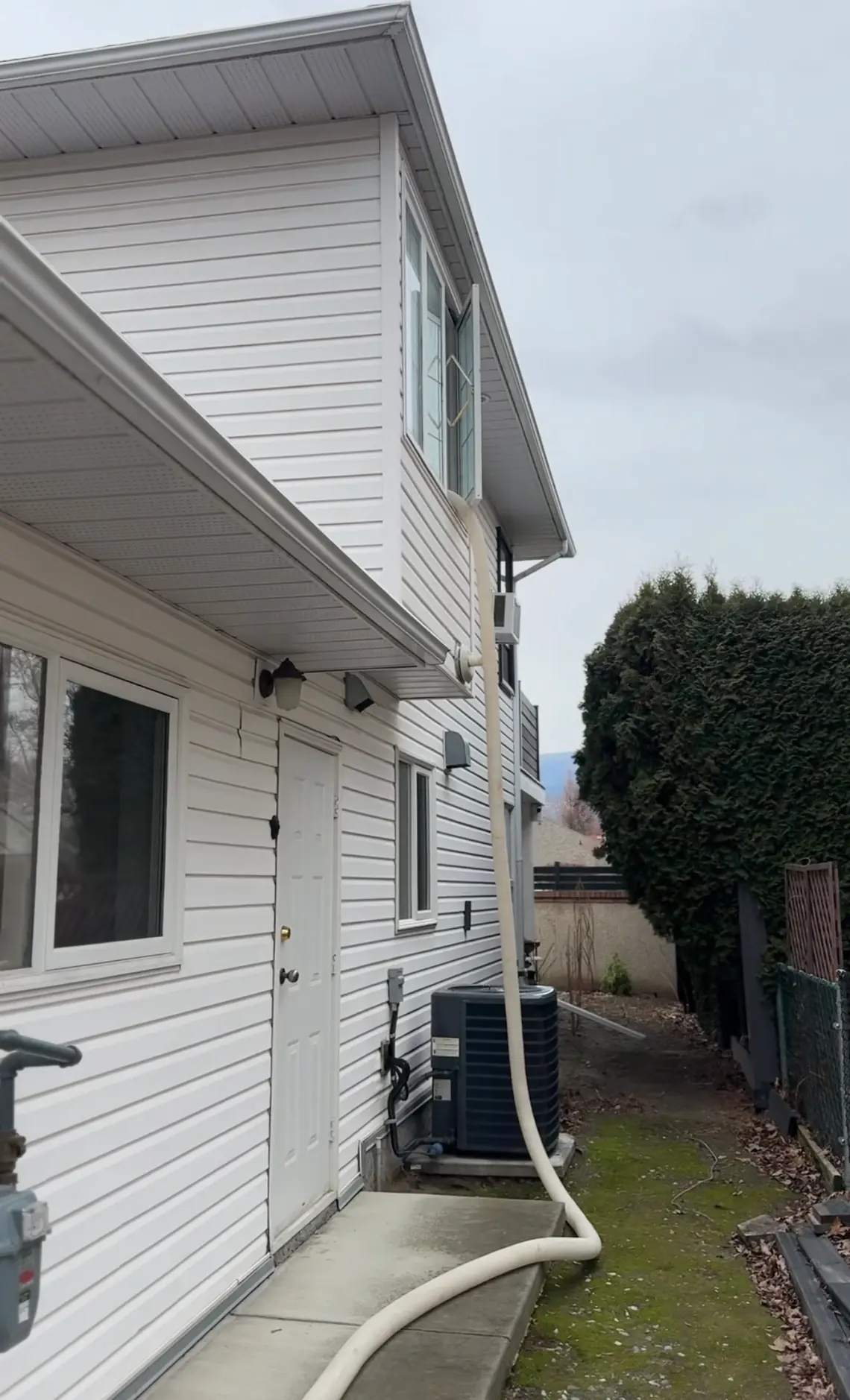
When the order is right, the results get boring in the best way. On one Kelowna attic we took the insulation from R-20 up to R-50 and captured $1,200 in rebates for the homeowner. On a real top-up like that, where a serious amount of material goes in over insulation that was well short of target, homeowners see 25 to 50 percent come off their bills. A thin skim over an attic that was already close to target does not do that, and nobody should tell you otherwise.
The rebate money is worth planning around too. A single service typically comes back around $1,200, and the insulation programs run up to $5,500 as the scope grows. Our guide to BC insulation rebates covers which ones stack, and Better Homes BC lists the current amounts. One thing to know before you shop on price: the rebate only pays out if the contractor is registered for the program. The cheapest number in the pile is often the one that costs you the cheque.
Get someone up there before you buy insulation
Nobody can fix what nobody has looked at. Book a free building assessment and we will go through the hatch, check all six of these, and put what we find in writing.
Book a Free Building Assessment or call (250) 900-6613. Bring a flashlight if you want to come up with us. Most people only do that once.
We handle attic insulation in Kelowna and the rest of the BC Interior.
Sources
- Government of Canada, vermiculite insulation and asbestos: canada.ca
- Natural Resources Canada, Keeping the Heat In, Section 5 Roofs and attics: natural-resources.canada.ca
- Better Homes BC insulation rebates: betterhomesbc.ca