
Attic insulation cost in BC comes down to three things: how big your attic is, how much R-value you are adding, and whether the attic gets air sealed before anything goes in. Those three move the price more than anything a brochure will tell you. The good news is that rebates can take a real bite out of the total, and on most homes the upgrade pays for itself in a few years. Here is what actually drives the number, what the materials cost, and how to get a price you can hold someone to.
What actually drives attic insulation cost
Most cost guides give you a tidy national average and call it a day. Your attic did not read that guide. The number on your invoice is set by what is actually up there, not by a chart.
Three things move the price the most.
Square footage. Bigger ceiling plane, more material, more labour. Simple.
Target R-value. Older Okanagan homes often sit around R-20 in the attic. Current best practice for comfort and rebates is closer to R-50 or R-60. Going from R-20 to R-50 is a lot more material than topping up an attic that is already at R-40.
Air sealing. This is the one people skip, and it is the one that decides whether the whole job was worth it. An attic full of insulation with air leaking through it is like a winter coat left unzipped. Warm, technically. Not doing its job.
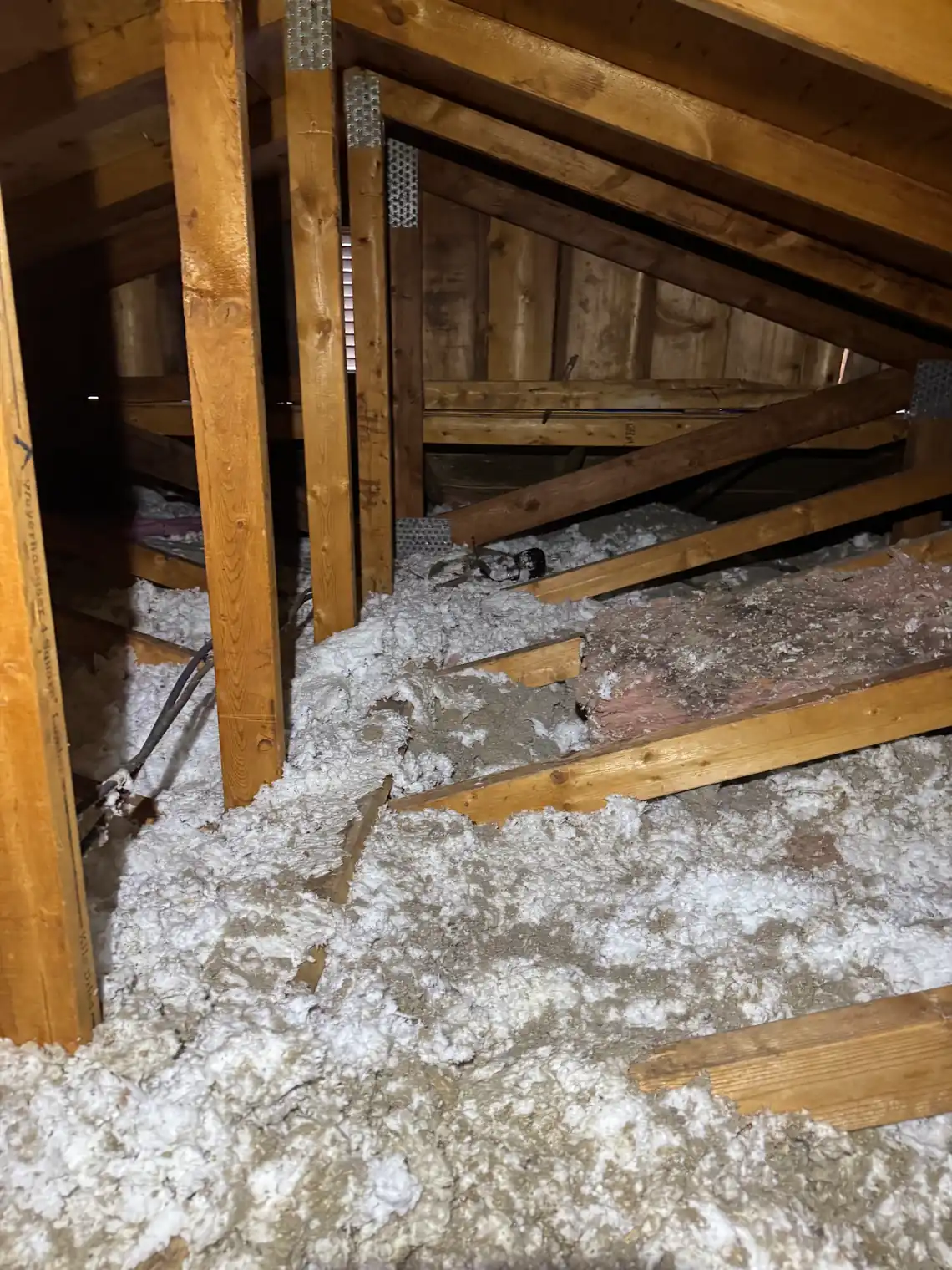
The condition of what is already up there matters too. Old, settled, mouse-chewed insulation sometimes has to come out first. Knob and tube wiring or a bathroom fan dumping moisture into the attic both have to be dealt with before anyone adds a single inch. None of that shows up in a price you get over the phone, because nobody on the phone has seen your attic.
Blown-in versus spray foam: where the money goes
There are two real ways to insulate an attic, and they are priced for two different jobs.
Blown-in is the budget workhorse. Loose fibreglass or cellulose blown across an open attic floor. It is the lowest cost per unit of R-value, which is exactly why it is the default for an open attic. If your attic is just thin and you need more R-value piled on top, blown-in is usually the sensible spend. I am not going to print a per-foot blown-in price here, because it swings with your attic and a number I make up helps nobody.
Closed-cell spray foam is the premium option, and the price reflects that you are buying two things at once. R-value and an air seal. Closed-cell foam runs about $1.80 for a board foot. A board foot is one square foot sprayed one inch thick. To reach R-30 you are around five inches, so do the multiplication and you can see why foam costs what it does. You are not just paying for R-value. You are paying for an air barrier the loose stuff cannot give you.
For a reference point, batt and poly installed on a wall or ceiling ran $1.71 per square foot in Kelowna this past March. Foam sits well above that. Nobody who knows the trade pretends otherwise.
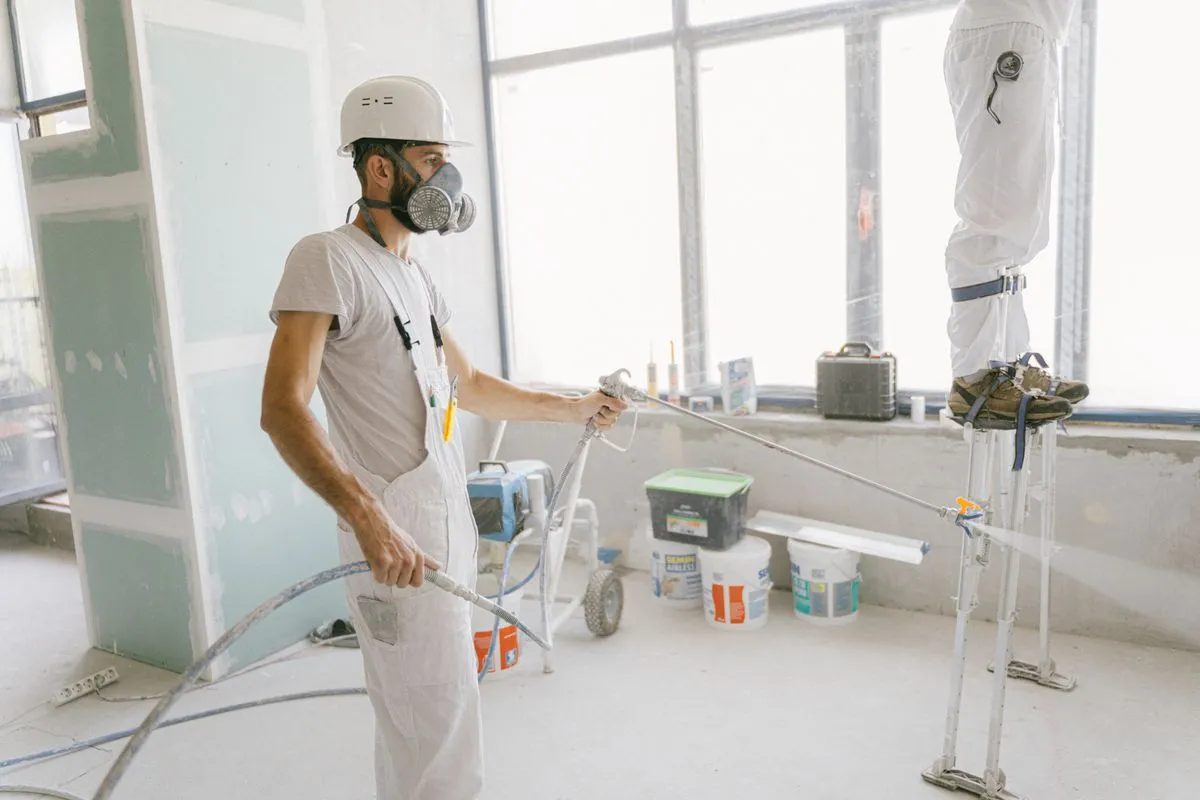
So where does foam earn its keep in an attic? When the attic leaks air, when you want to turn it into warm storage instead of a cold void, or on a cathedral ceiling where there is no room for loose fill and batt just grows mould. In those spots foam is not the expensive option. It is the only one that works. For the bigger picture on which foam goes where, our spray foam insulation in Kelowna page walks through it.
The rebates that knock the price down
Here is the part that changes the whole conversation. The sticker price is not what you pay.
Right now the per-service rebate sits at roughly $1,200. Do two or more services in one visit, say the attic and the crawlspace, and you trigger a bonus rebate on top of that. Across all the eligible residential work, the stacked average comes out around $5,500. That is real money coming back, not a coupon.
This is why we tell people to think about the attic and the crawlspace spray foam in Kelowna together. Doing both in one visit maximises the rebate and means one crew, one mess, one day. The air does not stop at the ceiling. Neither should the plan.
On one Kelowna attic this past January we took the insulation from R-20 up to R-50 and captured $1,200 in rebates for the homeowner. The rebate report is yours to keep no matter who does the work. We are HPCN certified, which is the boring credential that lets us register your project for programs most contractors never bring up. We check what you qualify for during the assessment, before any work starts. The full list of what stacks lives on our BC insulation rebates page.
Payback on a typical residential install runs two to four years, and that is before the rebates come off the top. Once they do, the math gets faster.
Why I will not give you a flat price over the phone
Spray foam is expensive. That is not a secret and I am not going to pretend otherwise. But every dollar of that price is doing something. Better foam. Trained operators. Certified equipment. Density checks. Two inch passes. No shortcuts.
The thing about insulation is that you cannot see it after the job is done. It is behind your drywall or buried under blown-in. You will not know if you were charged for four inches and given three until your heating bill starts telling you something is wrong, and by then the crew is long gone. Those numbers I keep quoting, R-30.7 at five inches, a density of 2.0 pounds per cubic foot, an air permeance of 0.001, only happen when the product and the application are both done right.
So when someone hands you a price for nothing, fast and over the phone, ask yourself how they did that without looking. A price that costs you nothing up front has a quiet habit of climbing 20 to 40 percent by invoice day, with a tidy list of reasons attached. The cheap one felt great right up until January.
That is the whole reason we do a proper assessment instead of a phone quote. We come out, measure every space, and the number we give you on site is the number on the invoice. The assessment is free, and it still gets you that guarantee, plus a written checklist and a rebate report you keep no matter who you hire.
When the attic is not where to start
I will tell you straight when an attic job is not your best move, because that is the point of the assessment.
If the rest of your house is still batt and poly, foaming only the attic will not give you the airtightness payoff you are picturing. The warm air you stop losing through the ceiling just finds the next gap and leaves through that instead. Air is patient like that. Sometimes the smarter first dollar is air sealing, or starting with the crawlspace where the cold is actually coming in.
A good attic insulation installer should be willing to talk you out of the wrong job. Plenty of attic insulation companies will happily sell you the most expensive thing on the truck. We would rather you spend the money where it actually changes your winter.
That is also why the calls that stick with us come years later, not the week after. Heating bills noticeably lower. The house quieter than it used to be. No moisture, no callbacks, nothing to fix. You pay for the attic once and you notice the difference for the life of the house. Insulation is boring right up until the day your bill makes it interesting.
Get a real number for your attic
Stop guessing at the cost and get a price you can actually plan around. The free building assessment gets you a measured quote, a written inspection checklist, and a rebate report that shows exactly what your project qualifies for. The number is guaranteed, and it costs you nothing to find out.
Book a Free Building Assessment or call Jacob directly at 250-900-6613. Bring your worst heating bill. We will tell you what it would take to fix it.